Premium Patio Installation & Custom Landscape Design in Hermiston, OR.
What to ExpectPremium Patio Installation & Custom Landscape Design
A custom-built patio is more than just a place to set a grill—it is a functional extension of your home’s living space and a major driver of your property’s curb appeal. However, a stunning outdoor living area doesn't happen by accident. It requires a meticulous balance between thoughtful landscape design and uncompromising structural engineering.
At Xotix Outdoor Care, we combine creative spatial planning with rigorous ground-preparation standards. Whether you are envisioning a sleek, modern entertainment pavilion or a rugged, organic backyard retreat, we design and build hardscapes meant to endure heavy foot traffic, shifting soils, and severe weather patterns.
Choosing Your Surface: Concrete Pavers vs. Natural Flagstone
The foundation of any great hardscape design is the surface material. Every material behaves differently underfoot, ages differently under the sun, and requires specific handling during installation. Here is an honest look at the two premium options we specialize in.
1. Architectural Concrete Pavers
Engineered concrete pavers offer a massive variety of shapes, colors, textures, and patterns. They can mimic everything from historic European cobblestone to clean, mid-century modern planks.
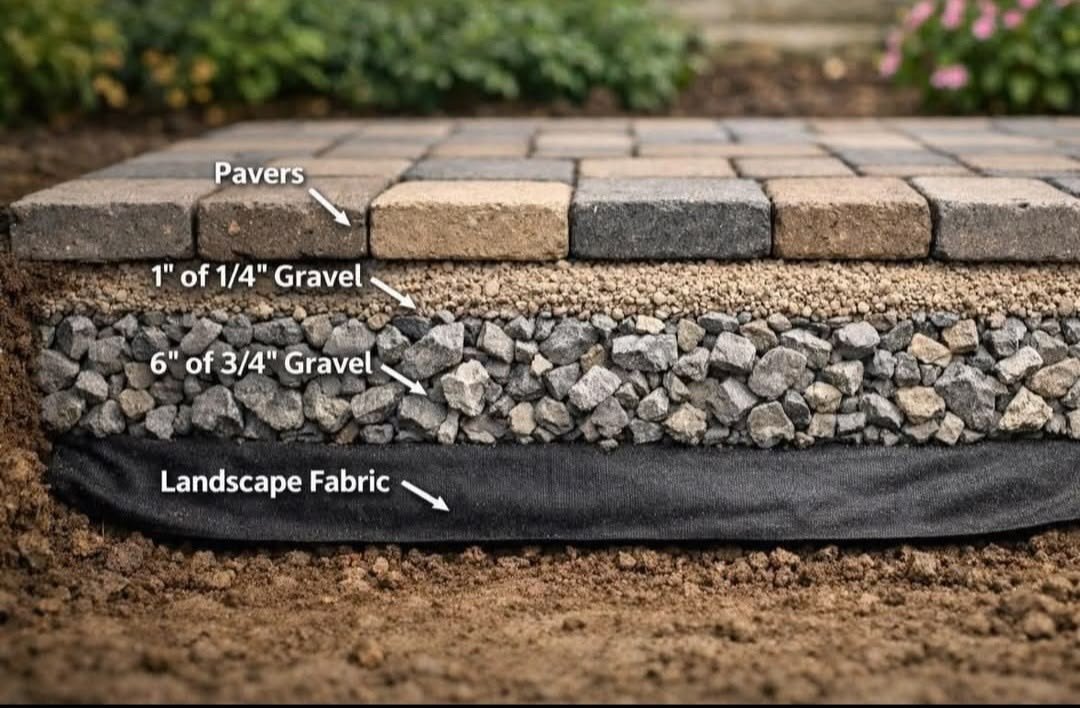
The Installation Method: We excavate the patio footprint to a depth of 7 to 9 inches, depending on soil stability. We lay down a heavy-duty geotextile stabilization fabric, followed by a 4-to-6-inch base of dense-graded, crushed angular stone. This base is machine-compacted in thin layers. Next, we screed a precise 1-inch bedding layer of clean concrete sand, hand-lay the pavers in your chosen pattern, and lock the perimeter using structural concrete edge restraints. Finally, we sweep high-performance polymeric sand into the joints and vibrate the entire surface to lock the pavers permanently into place.
The Advantages:
Unmatched Structural Strength: Individual pavers are incredibly dense and highly resistant to chipping, cracking, or splitting under heavy loads.
Flexibility & Self-Healing: Because a paver patio is a flexible system consisting of thousands of interlocking pieces, it naturally flexes with seasonal ground movement without cracking.
Low Maintenance & Easy Repairs: If a paver ever stains from grill grease or gets damaged, we can pop out that single unit and replace it seamlessly without tearing up the patio.
The Disadvantages:
Uniform Appearance: While textures have drastically improved, some homeowners still prefer the completely irregular, wild look of natural rock.
Joint Maintenance: While polymeric sand prevents weed growth and washouts, it may require a quick touch-up or top-off every 3 to 5 years.
2. Natural Flagstone (Slate, Sandstone, or Limestone)
Flagstone offers an authentic, timeless, and completely unique look. Because every stone is quarried directly from the earth, no two pieces are identical in shape, color variation, or texture.
The Installation Method: Flagstone can be installed using two distinct methods:
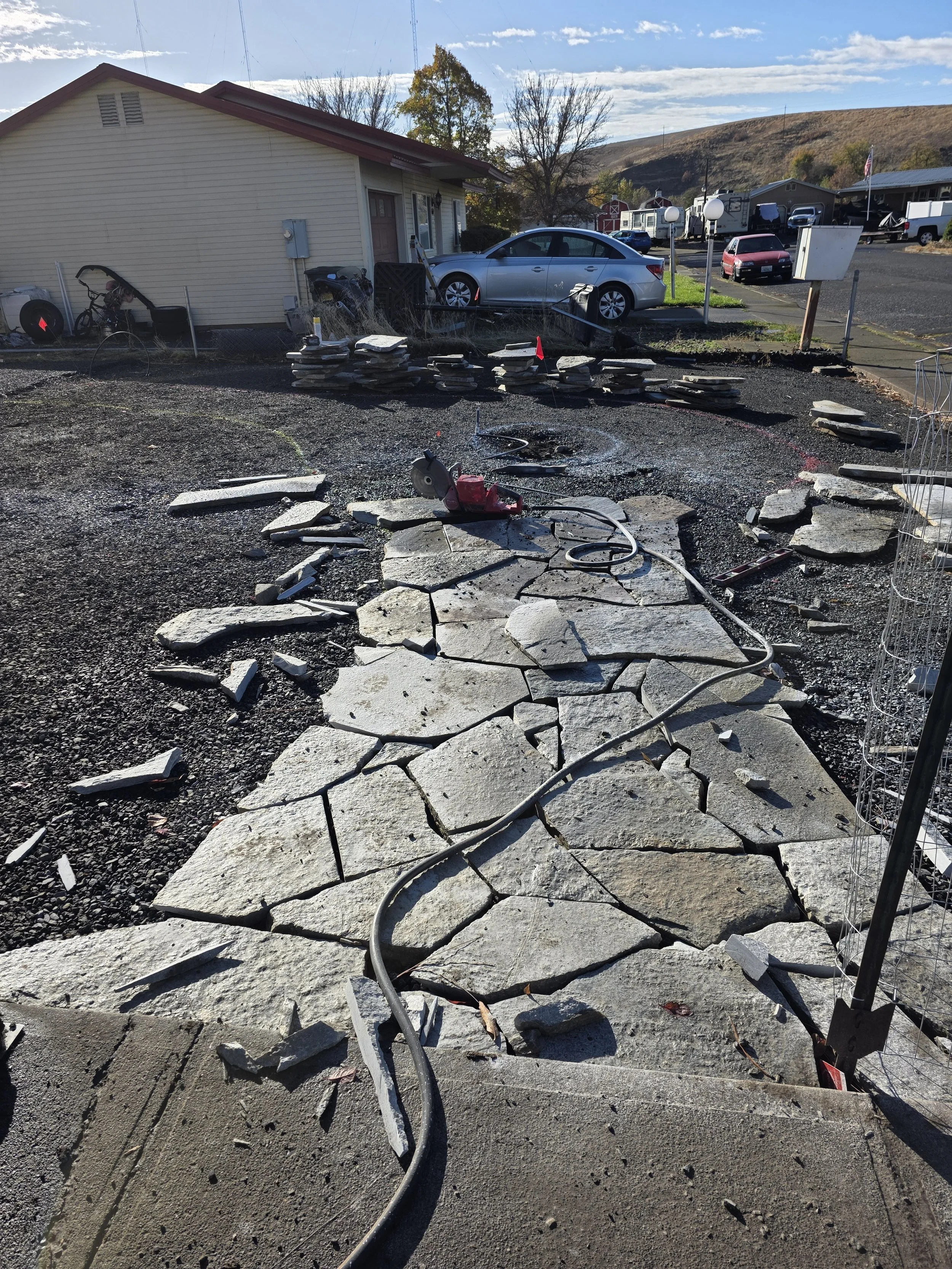
Dry-Laying (Flexible Base): Similar to the paver method, large, irregular stones are meticulously fit together like a giant puzzle over a compacted gravel and sand base. The wide joints are filled with crushed stone dust or stable polymeric sand.
Wet-Laying (Rigid Base): The stones are mortared directly onto a freshly poured structural concrete slab that sits below the local frost line. The joints are then filled with jointing mortar.
The Advantages:
High-End Organic Aesthetic: Natural stone delivers an irreplaceable, high-end look that matures beautifully over time, developing a rich patina that concrete cannot perfectly replicate.
Naturally Slip-Resistant: The organic, cleft texture of natural flagstone provides excellent natural traction, even when wet, making it fantastic around pool decks or exposed walkways.
Thermal Mass: Natural stone holds up exceptionally well under intense summer heat without warping or degrading.
The Disadvantages:
High Labor Costs: Fitting irregular flagstones together is a slow art form. It requires an experienced craftsman to hand-tool, cut, and shape the stones so the joint lines remain narrow and clean.
Uneven Surfaces: Because flagstone is split naturally, individual stones have slight thickness variances. This can result in minor ridges that make patio furniture wobble slightly if not perfectly sorted during layout.
Susceptibility to Spalling (Wet-Lay): If water finds its way under a mortared flagstone during a hard winter freeze, it can pop the stone loose or cause layers of the rock to flake off (spall).
The Invisible Difference: Why Hardscapes Fail
When you look at a failing patio that is sinking, shifting, or covered in weeds, you aren't looking at a material failure—you are looking at a base failure.
Many budget contractors skip the hidden steps to cut costs, but at Xotix, our installation standards are designed to outlast your mortgage.
[Excavation & Geotextile] -> [Compacted Angular Base] -> [Structural Edge Restraints] -> [Polymeric Sand Jointing]
Geotextile Separation: We line the raw dirt trench with professional-grade geotextile fabric. This prevents the heavy gravel base from sinking and mixing into the soft subgrade clay or soil beneath it over time, which is the primary cause of patio dipping.
95% Proctor Compaction: We don't just run a light vibratory plate over the gravel once. We compact our stone bases in 2-inch increments using heavy commercial equipment, ensuring zero air pockets remain.
The Power of Polymeric Sand: We don't use regular play sand in our joints. We use polymeric sand—a specialized blend of clean sand and advanced polymers. When activated with water, it hardens into a strong, flexible binder that locks out ants, completely resists weed seeds, and won't wash away during heavy torrential downpours.